
AI Interviews Are Driving Away Your Best Talent: 30% Dropout Rate Proves Technology Alone Won’t Fix a Broken Process
Speed, Savings, and a Silent Rebellion Nobody Saw Coming

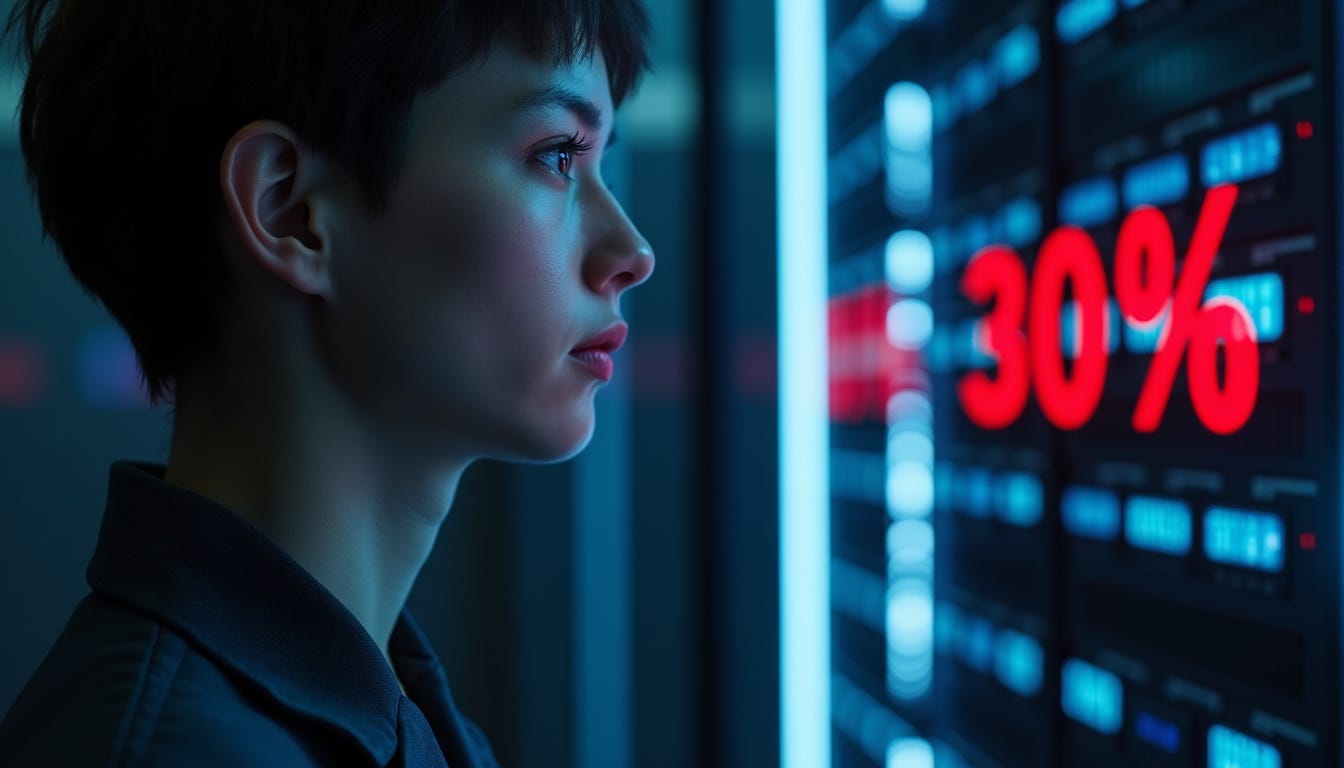
New data proves that hiding AI from candidates destroys trust and drives away good people.
30% is not a small number. That is nearly one in three people walking away. If a company lost 30% of its customers at the checkout counter, there would be an emergency meeting. But in recruiting, many employers are ignoring the problem because they are focused on speed and cost savings. The numbers come from a real survey of UK job seekers. Here is what they found.
Most People Are Interviewed by AI Without Ever Being Told
Nearly half of job seekers (47%) say they have been interviewed by AI. Of those, 82% were not told beforehand that an AI would be involved. Almost one in four (24%) only realized AI was being used after the interview started.
Think about that. A person sits down for a job interview. They answer questions. They try to make a good impression. All along, a machine is scoring them, and no one said a word. This is not a small oversight. It is a breakdown of basic honesty. Only 10% of employers have clear rules about how they use AI in hiring. Meanwhile, 59% of job seekers say companies should be required by law to tell them when AI is used.
The message is clear: People do not like being kept in the dark.
Why Do Candidates Drop Out?
Because they lose trust. When a company hides the fact that a machine is screening them, candidates assume the worst. They think: If they are sneaky about this, what else are they hiding?
The dropout rate is not just a number. Every person who walks away tells other people about their bad experience. In a tight job market, that word of mouth kills a company’s reputation.
One expert quoted in the research said AI is “making a bad system worse.” That is a polite way of saying: If your hiring process already stinks, adding AI just makes the stink spread faster.
Bias Is Still a Problem – AI Did Not Fix It
Many people hoped AI would be fairer than human interviewers. The data says otherwise.
Age bias: 27% saw it in AI interviews. 29% saw it in human interviews.
Race or ethnicity bias: 17% saw it in AI. 20% saw it in human interviews.
Those numbers are almost identical. AI did not make bias worse, but it did not make it better either.
That matters because tech vendors have been selling AI as a solution to prejudice. The data proves that is mostly marketing. The machine often learns the same bad habits as the people who built it. One chief people officer put it bluntly: Until companies are honest about what these tools actually measure and admit when they get it wrong, they are just “repackaging the same problem.”
Most People Do Not Want to Ban AI - They Want Fair Rules
Here is what the survey found that most headlines miss: Only 19% of job seekers want companies to use less AI in hiring.
The majority are not anti-technology. They are anti-secrecy.
Here is what they actually want:
Tell them up front when AI is being used (40% asked for this).
Give them the option to talk to a real human instead (45% asked for this).
Show proof that the AI has been checked for bias (28% asked for this).
None of these are crazy demands. They are common sense. As one CEO said: “Candidates are not objecting to AI in principle. They are reacting to its invisibility.” When you change the rules without telling people, trust dies. And hiring runs on trust.
Four Things Any Employer Can Do Right Now
Any company using AI interviews can fix these problems without tearing out the technology. Here is how.
1. Publish a simple AI policy on your careers page: Say what tool you use, what data you collect, and whether someone can ask for a human interview. Do not hide it in small print. Put it where candidates can find it easily.
2. Have an outside group check your AI for bias: Do not just trust the vendor’s sales pitch. Hire an independent firm to test whether your AI treats older people, different races, or non-native speakers fairly. Then post a one-page summary of what they found. This builds more trust than any recruiting video.
3. Always offer a human option: For every AI interview, provide a clear way to speak to a real person. This does not mean abandoning efficiency. It means respecting that nearly half of candidates want that choice.
4. Track who drops out – and look for patterns: The 30% average might hide bigger problems. Track dropout rates by age, by race, and by job type. If certain groups walk away more often, your AI is systematically filtering them out. That is not just bad hiring. It could be illegal.
Fix the Process First. Then Add the AI.
The biggest mistake companies make is thinking AI can rescue a broken hiring process. It cannot.
If your hiring takes too long, if you never give feedback, and if your interviewers are rude or untrained, adding AI just makes those problems happen faster and at a larger scale.
Do this instead:
Map out every step a candidate goes through. Find the spots where people get frustrated or wait too long.
Fix those human problems first. Train your interviewers. Cut unnecessary steps. Send rejection emails that actually explain why.
Then use AI to handle boring, repetitive tasks – always with clear disclosure and a way to talk to a human.
Running Before Walking
Thirty percent of candidates are walking away from AI interviews. That is a rebellion. They are not refusing to use technology. They are refusing to be treated like data points. Any company can fix this. Be honest about when AI is used. Offer a human alternative. Prove the tool is fair. None of this is expensive. It just requires treating candidates like adults.
The choice is simple: Keep using invisible, unaccountable AI interviews and watch good people leave. Or come clean, build in human choice, and earn the trust that no machine can ever replace.